‘Eric’s was more than a club. It was somewhere where you could meet like-minded people, where you could get a musical education, and where the regulars went on to do amazing things in the music business’
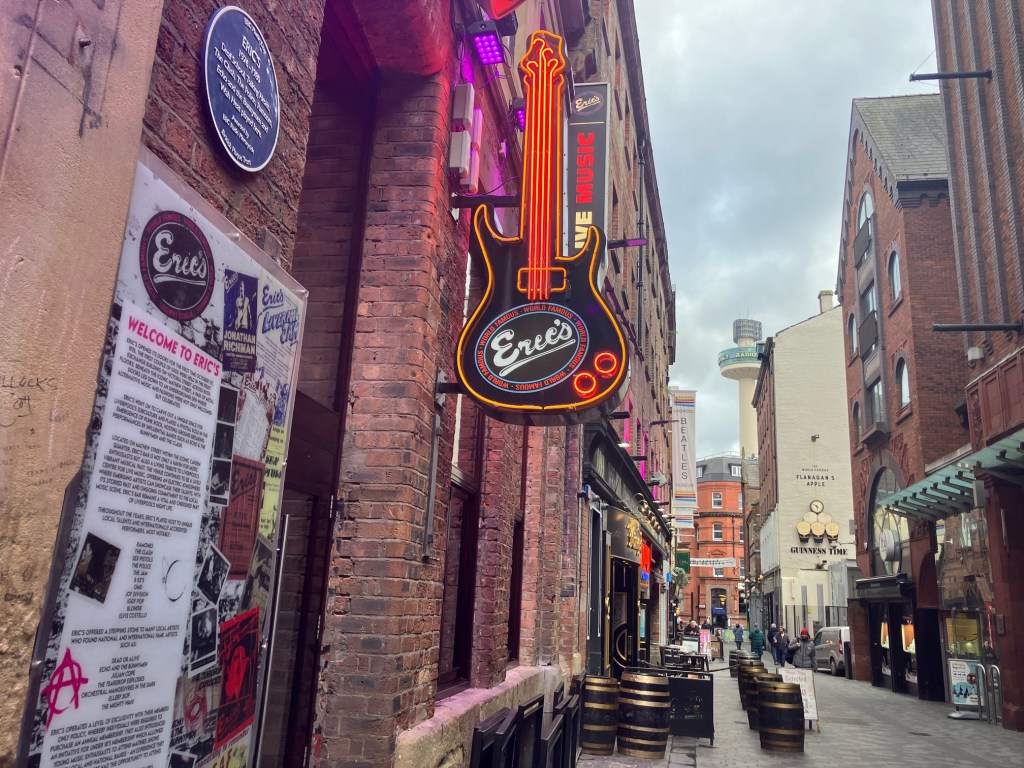
In 1976, two men at “loose ends” opened a music club on Liverpool’s Mathew Street. In four years, it hosted some of the biggest bands in the country and revived the city’s musical scene for a generation.
The venue was Eric’s and the two founders, Roger Eagle and Ken Testi. The pair met while working with the Liverpool band Deaf School in 1976, which was managed by the latter.
Ken had been touring the country with Deaf School, while Roger was an events manager at the Liverpool Stadium, a now-closed 3,700-seat boxing arena. Ken recalled: “It was apparent to Roger, at that time, that the Stadium was going to close that year. And it became obvious, later that year, that Deaf School was going to America, and I wasn’t going to be going with them, so Roger and I were both about to both be at loose ends.”
Having talked about the possibility of opening a venue together, an opportunity arose when Roy Adams, who operated the Cavern Club on Mathew Street, opened a venue called the New Cavern. Ken said: “[Roy] thought it would be a good idea to buy the building opposite, refurbish it on two floors and call it – in a breakthrough moment of imagination – the New Cavern.
“It bombed – because he didn’t have any booking skills. He knew how to do clubs and DJs and have bands through on the sausage factory basis, [but] he didn’t know how to book talent.

“Roger knew that the New Cavern premises were looking for booking talent. So, when we got to the moment of: ‘Where are we going to go? Where are we going to take this amorphous thing?’, he said, ‘don’t worry, I’ll make a call’, because he knew he could get into the New Cavern.”
Ken and Roger moved into the cellar of the New Cavern, into what would later be known as Eric’s. Ken came up with the name as a “strike back” at the more feminine names of many nightclubs of the era.
He said: “My girlfriend at the time wanted to know where this club was going to be and I said, ‘it’s in Mathew Street’. She said: ‘What are you going to call it?’ We hadn’t thought about it at all.
“All of the clubs were given almost Disney-esque names, aspirational names – they were usually feminine. So you’d got Tiffany’s, Rebecca’s, Cinderella’s. And I thought, well, they’re inviting you to assume something about them with their name, and that always seemed wrong to me.
“So I wanted a male name as a strike back. I think the perceived wisdom had been, from the club owners that washed over from the ’60s, that if you made it a feminine name, you’d attract the girls and the girls would attract the boys. I just wanted an Anglo-Saxon name that didn’t assume anything, so you’d have to go to get an idea of what the offer was and I just came up with Eric.
“We kind of got sucked into Mathew Street. Six months later, Roy wanted to sell the freehold to us so he could move on and do something else.”
Now that Ken and Roger had a club, it needed some members. Ken recalled: “Roger and I had a conversation immediately after our meeting with Roy Adams and I had two questions that I wanted to raise.
“The first one was; where do we get our audience? Where do we find them? And where do we find support bands? The acts that were available in Liverpool at the time had all sort of spun out of the 60s, 70s, progressive rock, blues, heavy rock, and none of them were suitable.
“Roger and I used to read the music papers religiously; every week and it was easy to see that there was a lot of stuff happening. I knew that the Art College was producing an act – the Art College had been the source of a great deal over the years.
“So, I went up to the Art College and I sent Roger in to Aunt Twackie’s, which was a sort of little market area underneath O’Halligan’s Parlour, because I knew there was a girl in there with a shaved head who looked bizarre and attracted around her what I considered to be the most interesting looking people in Liverpool; Pete Burns, Holly Johnson, and a few more.
“I said, ‘I’ll go up to the Art College and find a sense of talent. You go in there, get hold of that bald girl and bring her in, see if she’ll come to the club with her mates’ – and that was Jane Casey.
“We got Holly Johnson and then there was Ian Brodie. Roger would bully people in and, in the case of Pete Burns, famously said, ‘look, if you don’t form a band, you’re barred’. Because, you know, he was Pete Burns.”
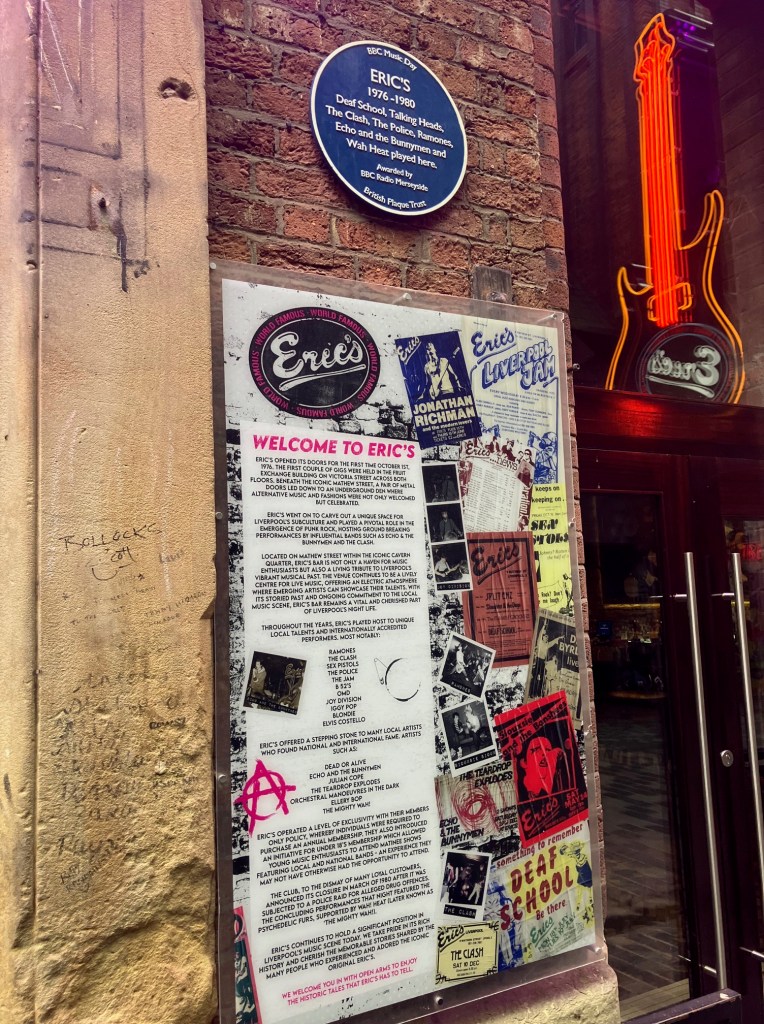
Merseyside bands like Pete Burns’ Dead or Alive, Echo & the Bunnymen and Orchestral Manoeuvres in the Dark helped launch their careers with gigs at Eric’s, while the club played host to U2, Elvis Costello, The Buzzcocks, The Clash, Joy Division, The Ramones, The Sex Pistols and Talking Heads.
Peter Fulwell, who owned the Inevitable record label and would later manage bands The Christians and It’s Immaterial, later joined Ken and Roger running the club.
Eric’s was a membership-only venue. However, it was an alleged breach of the membership card rules that signalled the beginning of the end for the venue.
On March 13, 1980, Eric’s announced a closing date, stating that it was being forced to shut due to opposition of the renewal of its licence alleging that the club was turning a blind eye to non-members attending the venue. The following night, despite being planned as the penultimate night, would be Eric’s’ last, when it was raided by police for alleged drug offences.
Penny Kiley was one of the fans in attendance that evening. She said: “I just felt terrible for the whole of that night, knowing we were going to lose it. The place meant so much to so many of us.
“We left after The Psychedelic Furs had finished. It was just too heavy and I didn’t want to be there anymore. We were going for the last bus when the police vans turned up.
“They’d obviously chosen to arrive 10 minutes before the last bus because that meant that all the people in the club at the time had no way of getting home – it was just petty vindictiveness.”
Penny added: “Eric’s was more than a club. It was somewhere where you could meet like-minded people, where you could get a musical education, and where the regulars went on to do amazing things in the music business.”
 Taste Uncharted